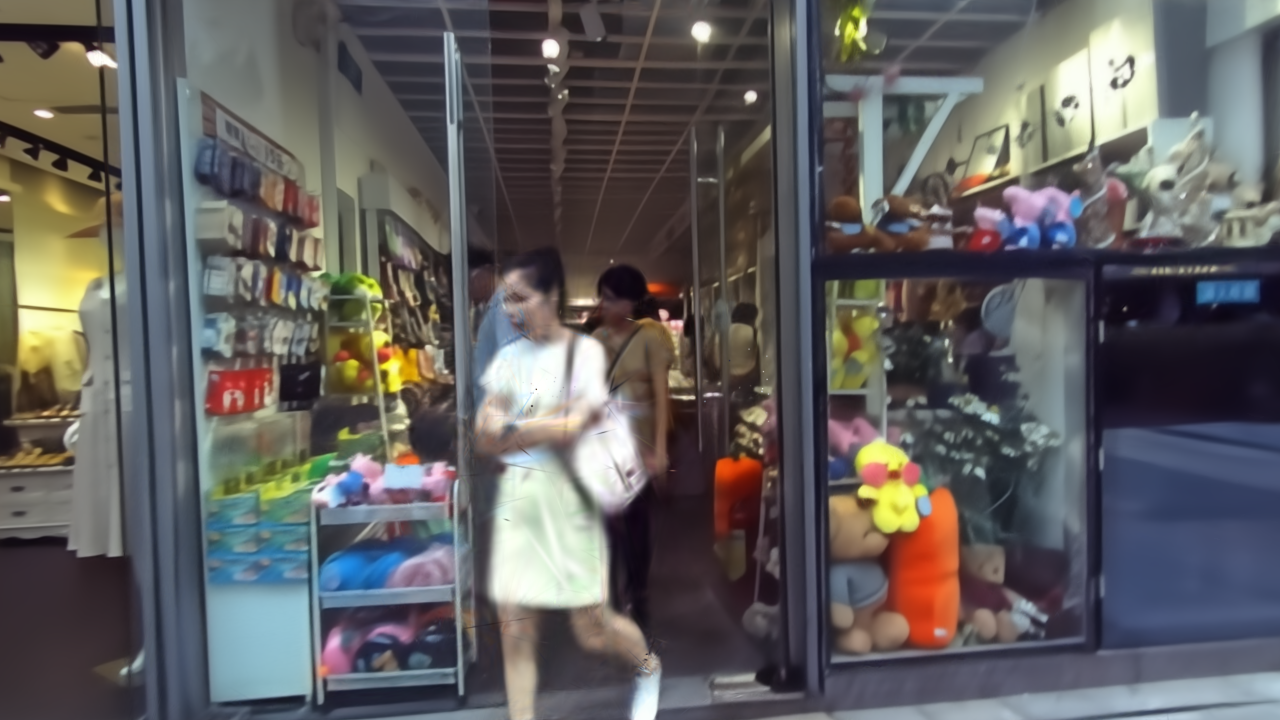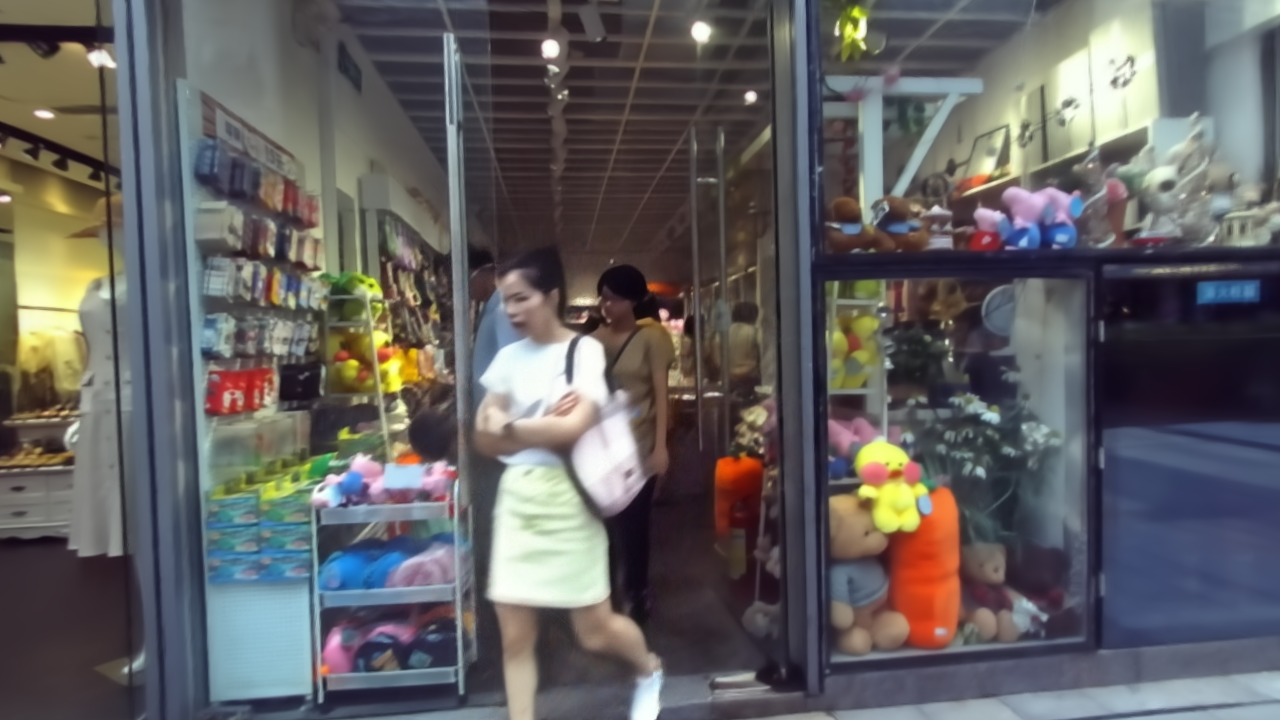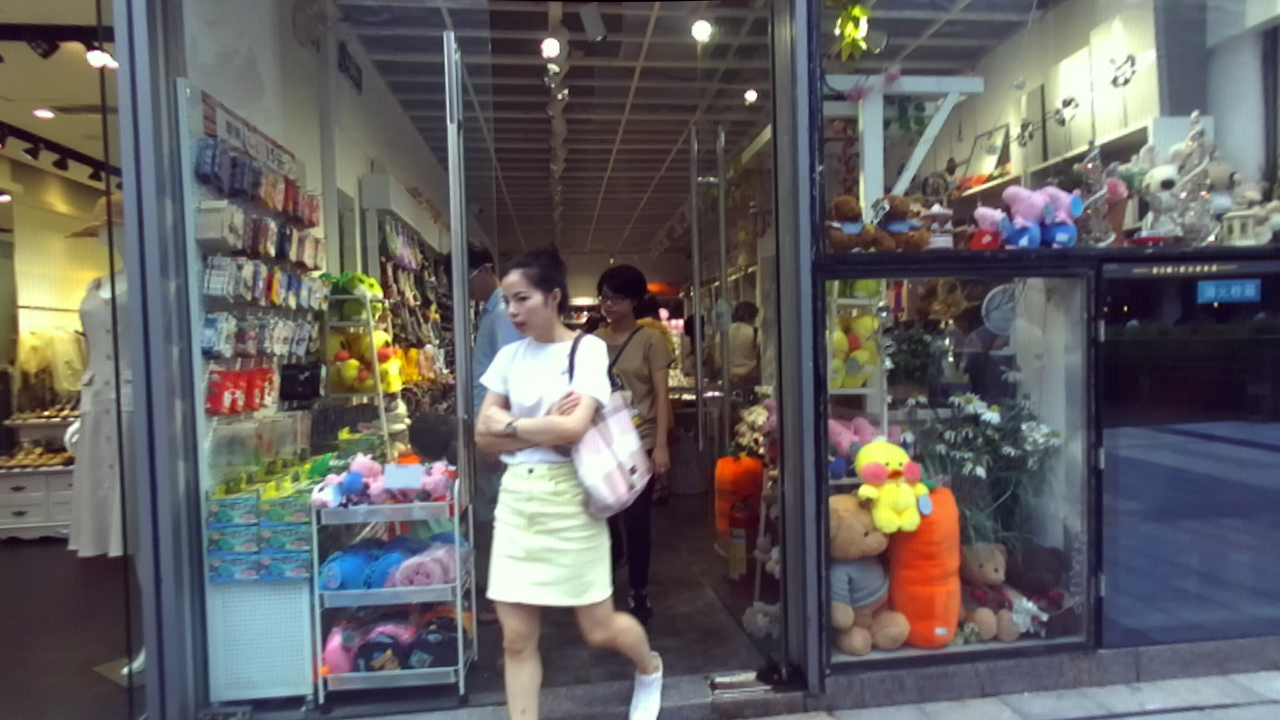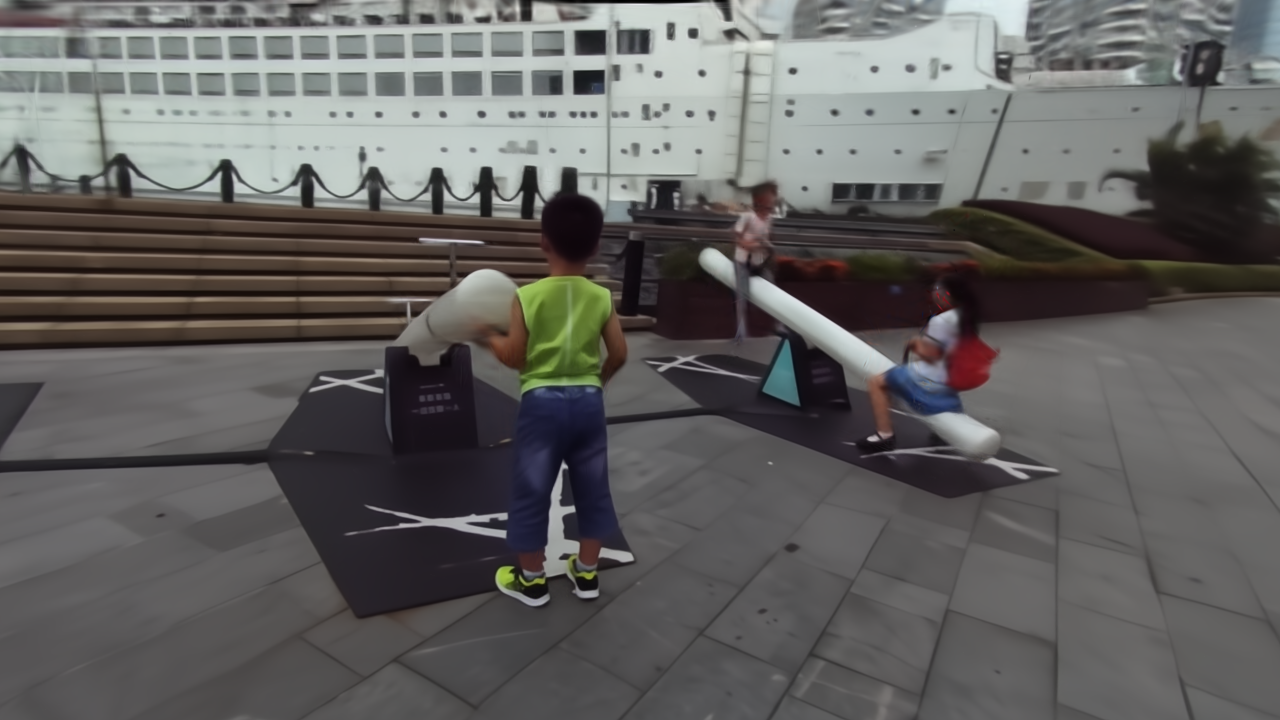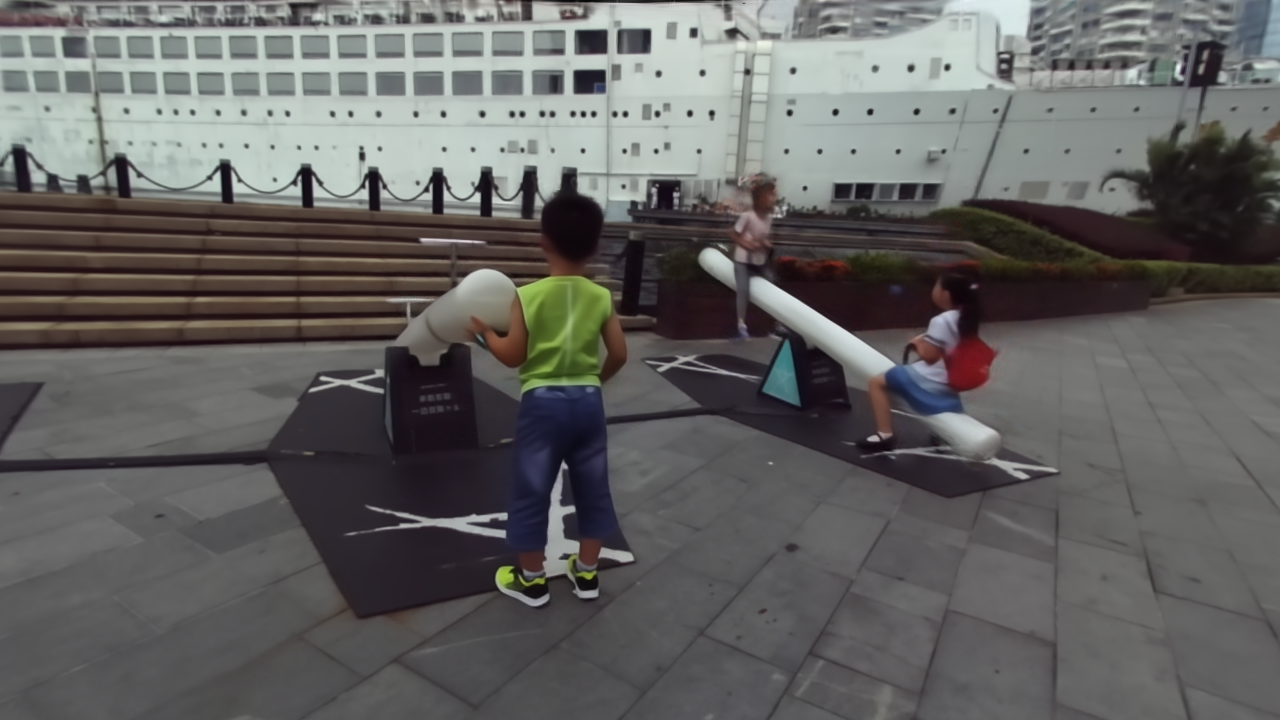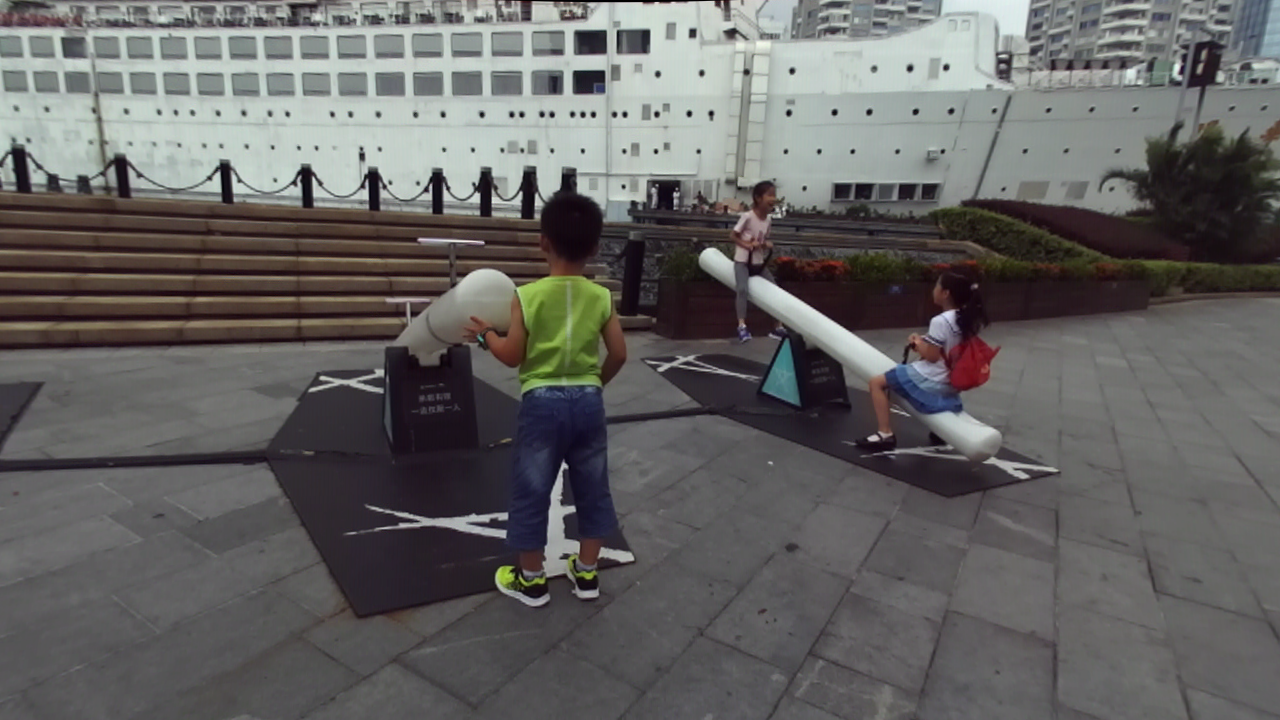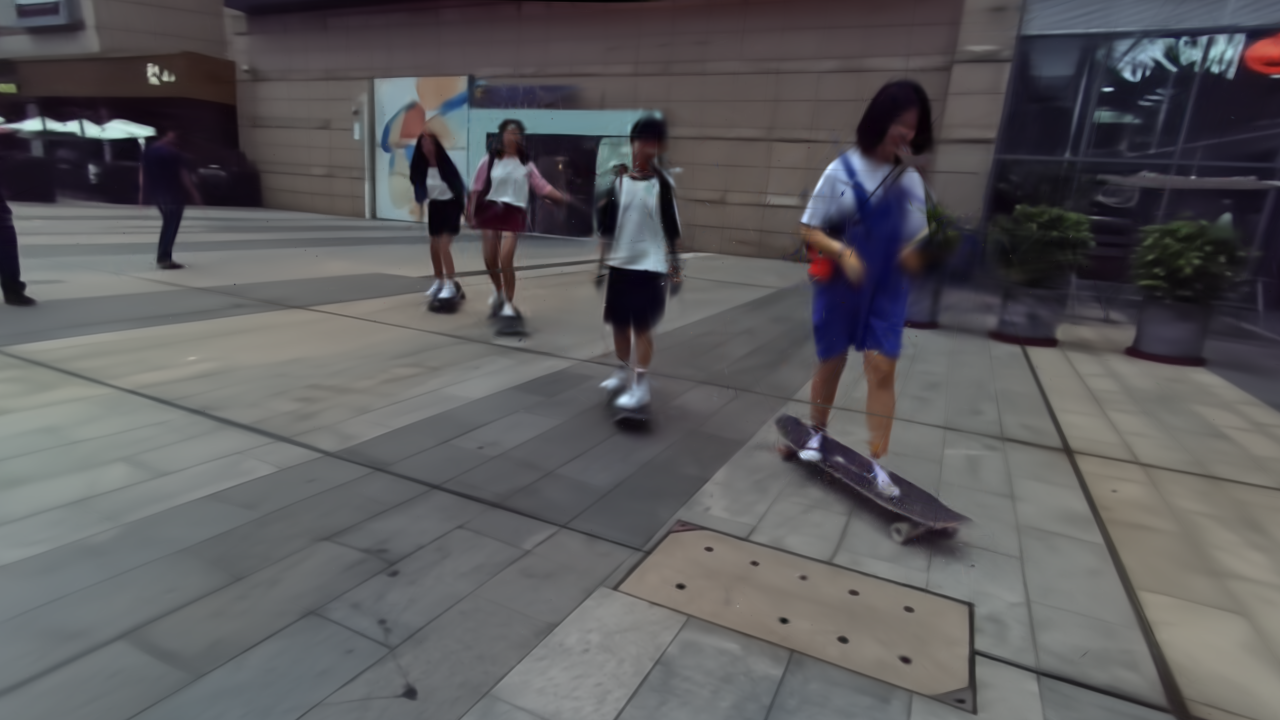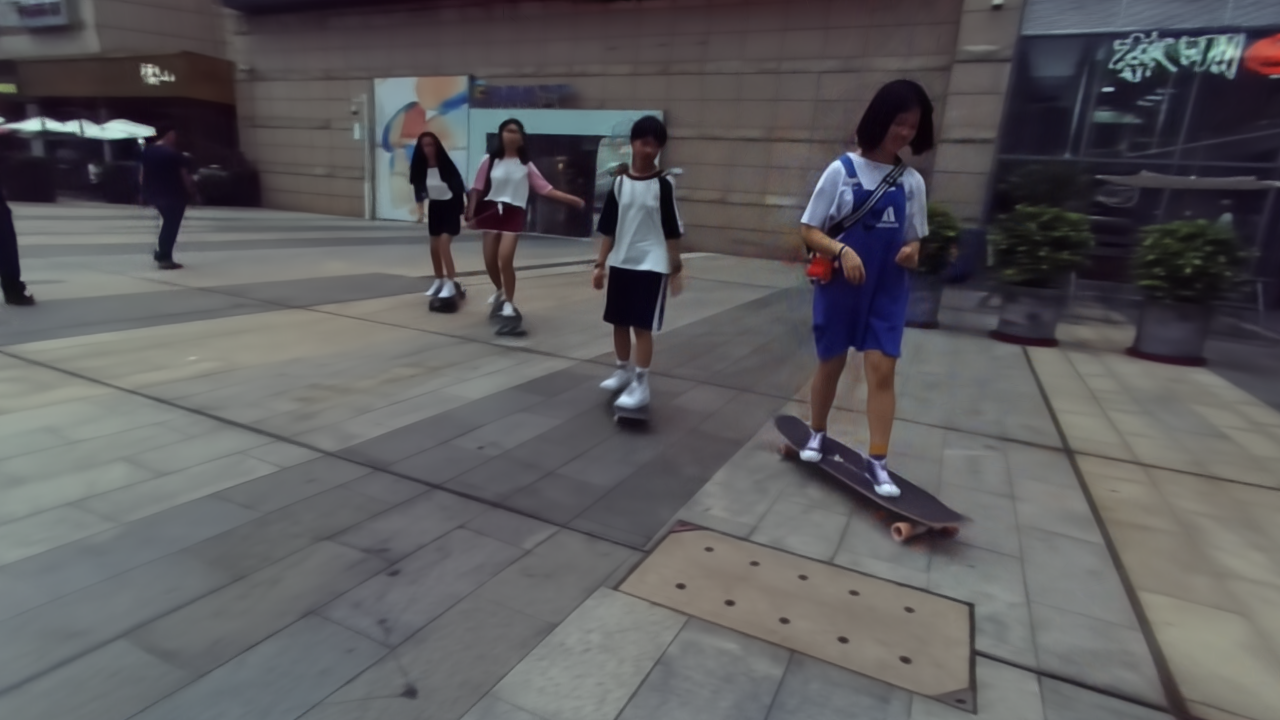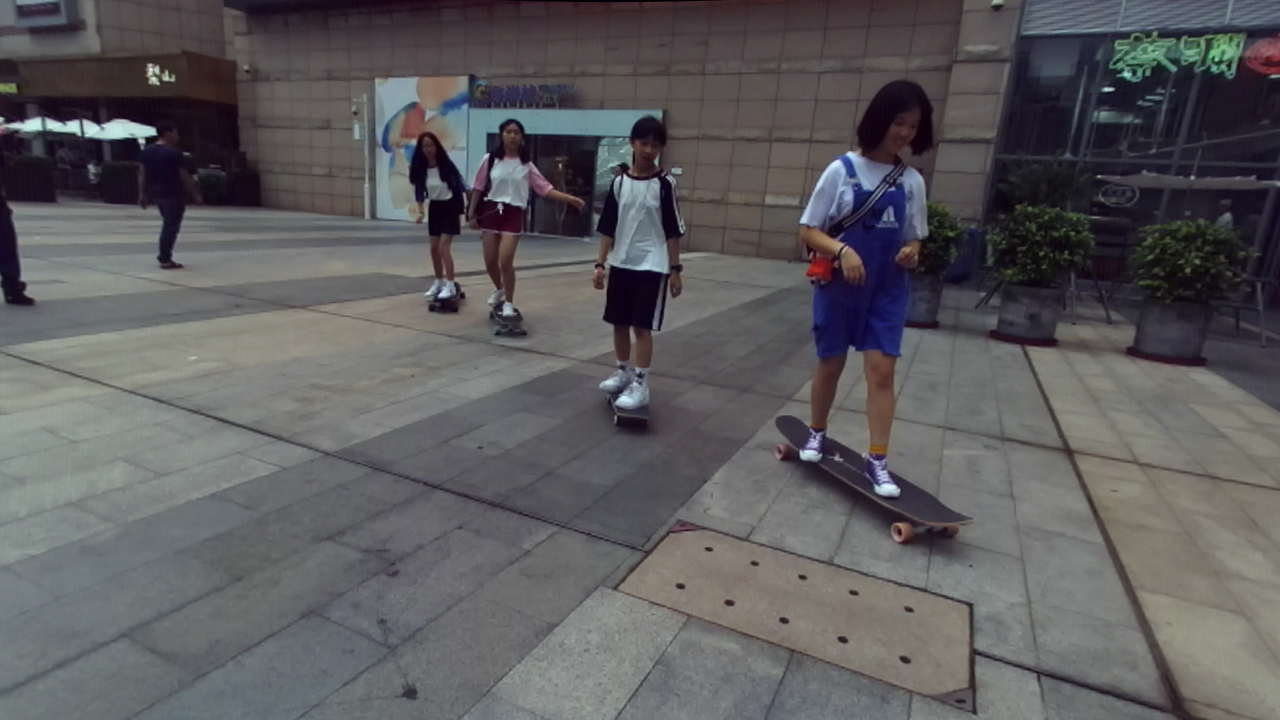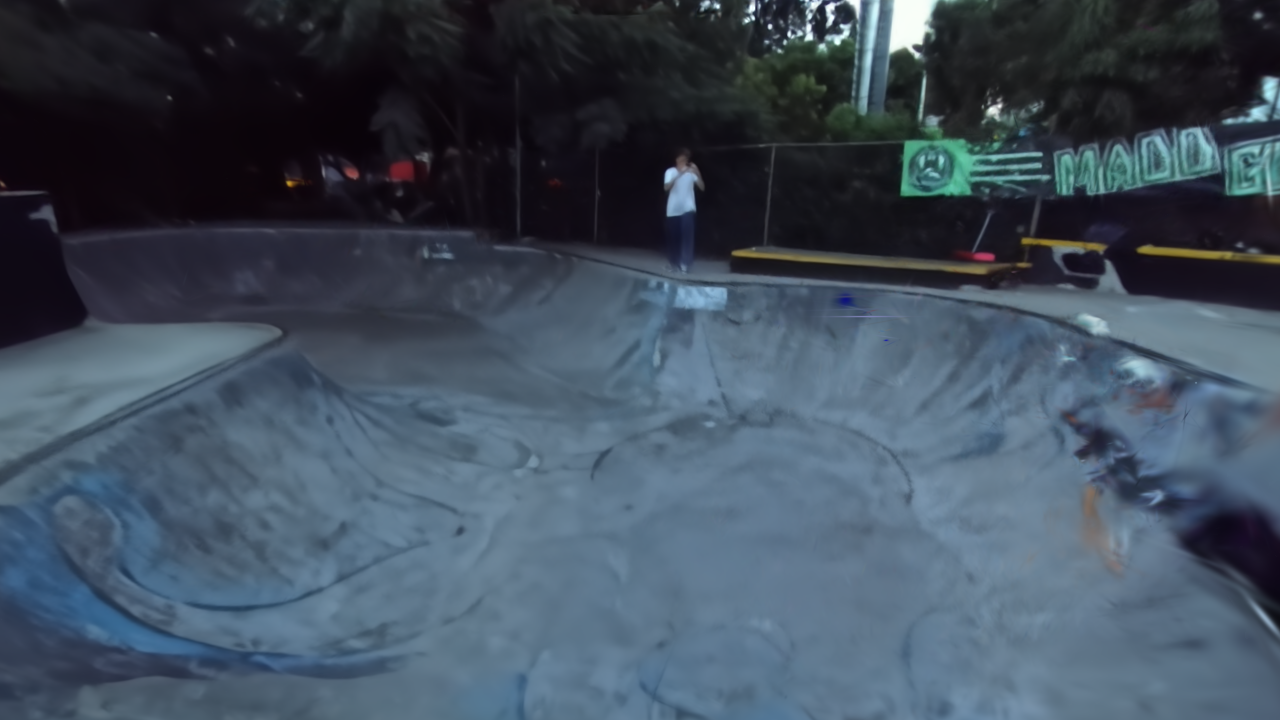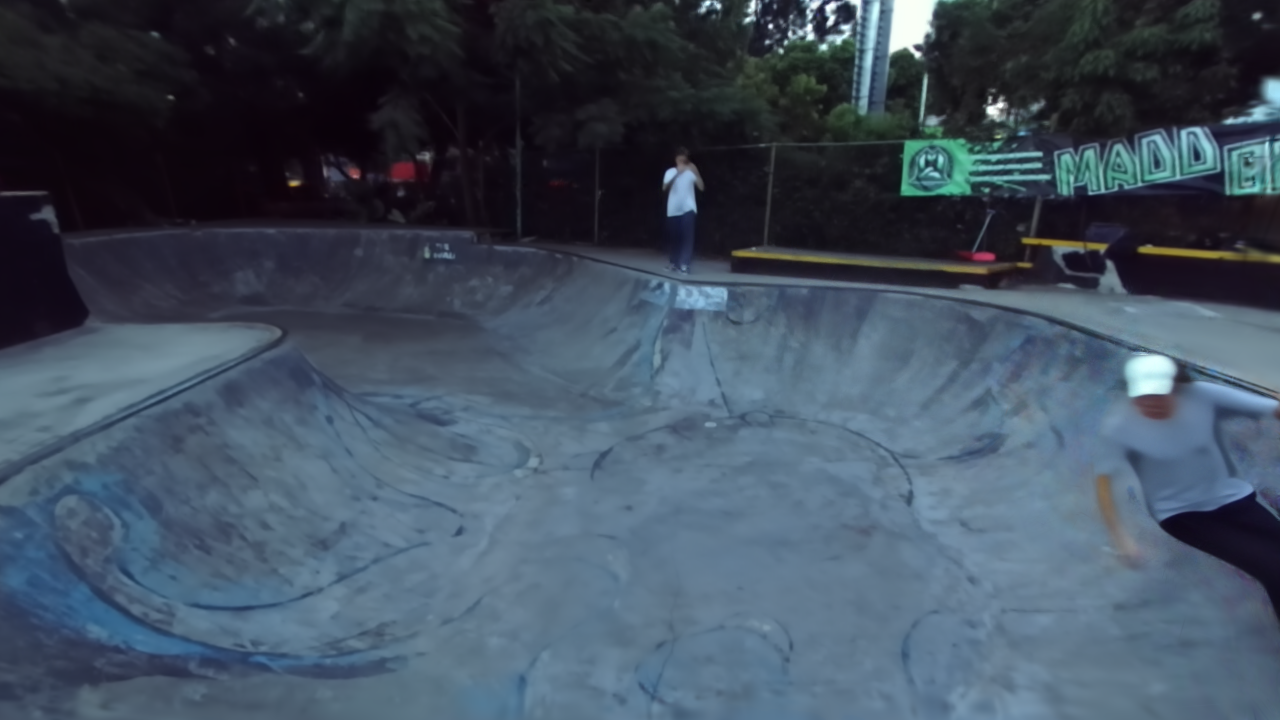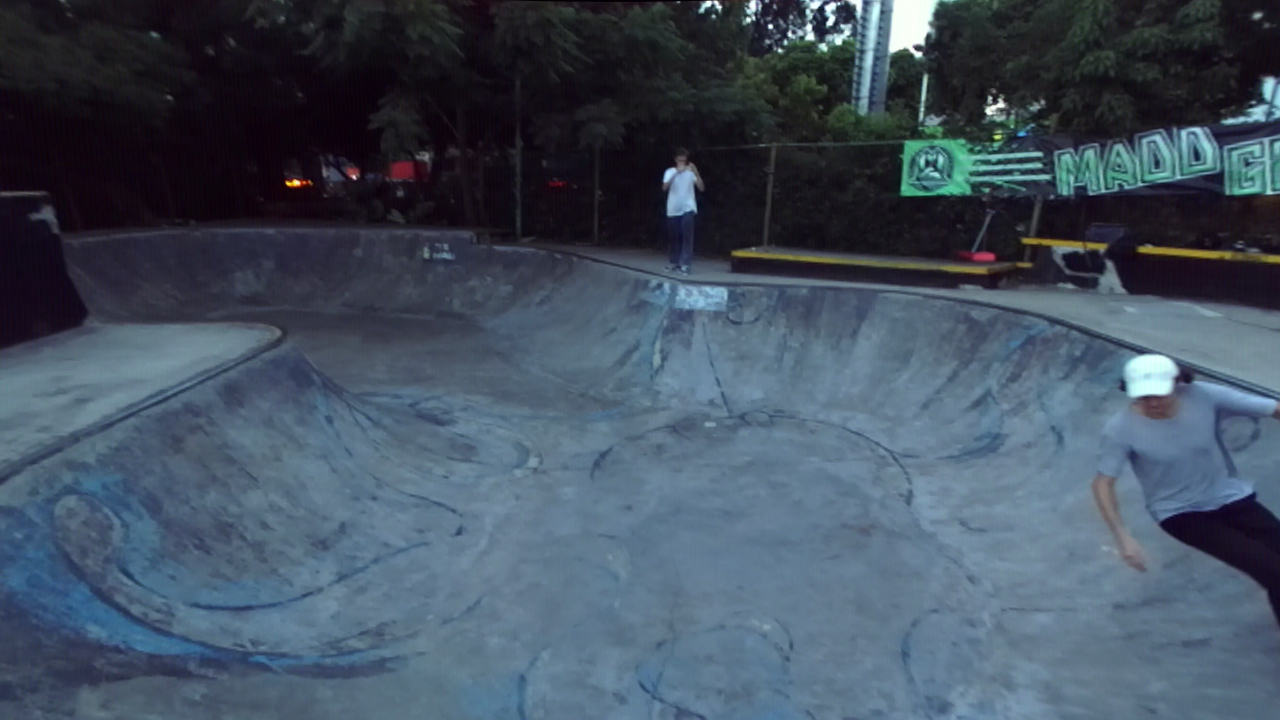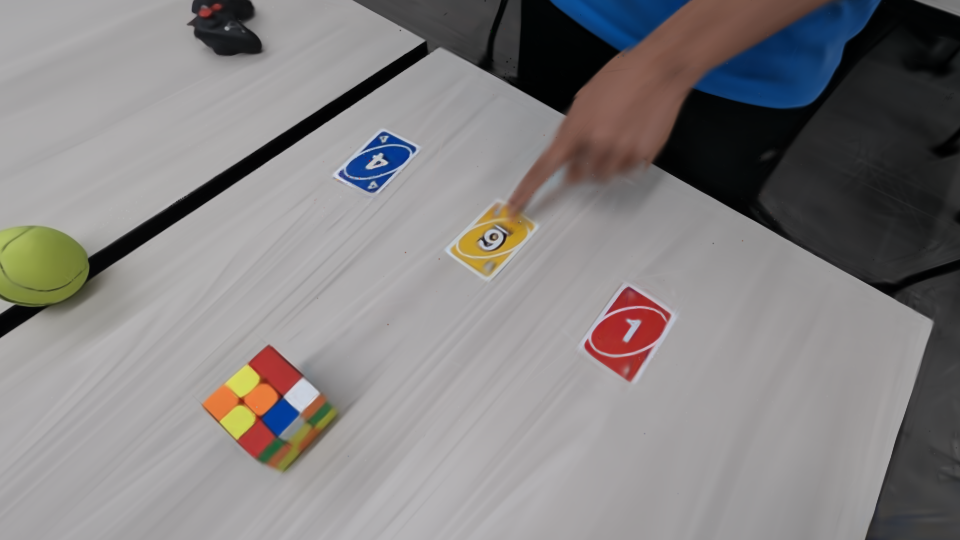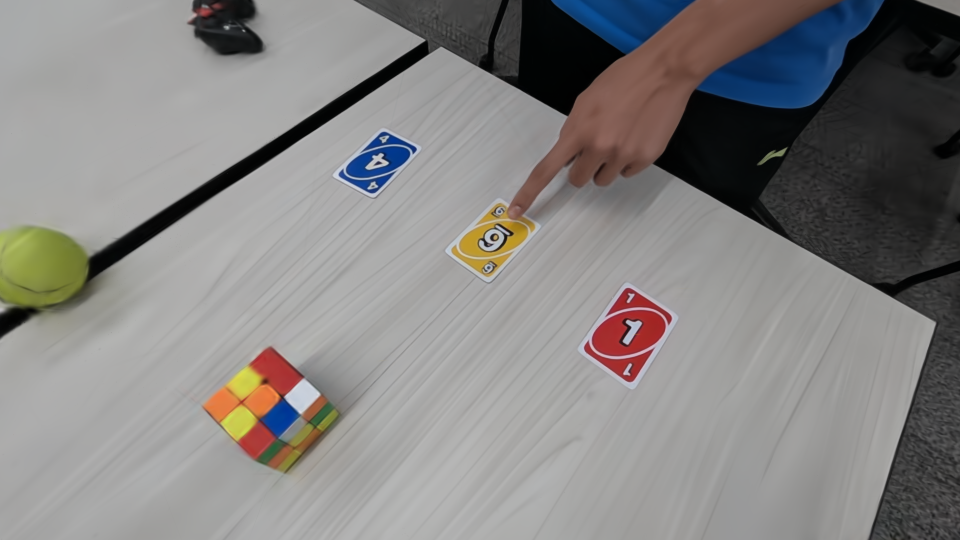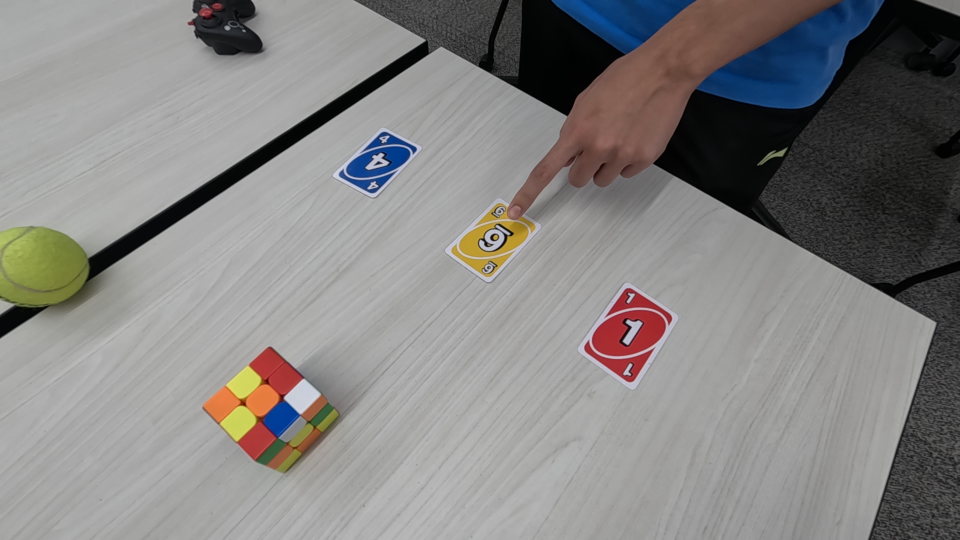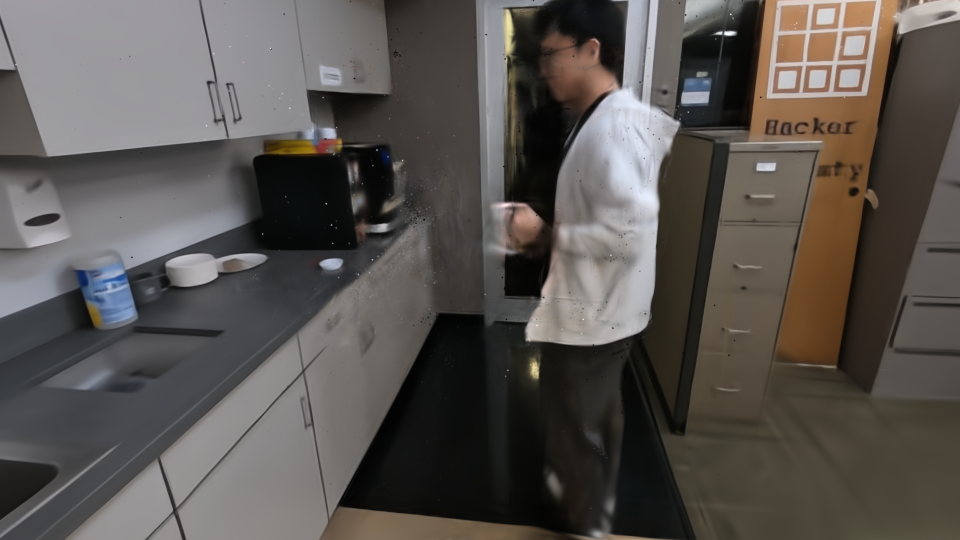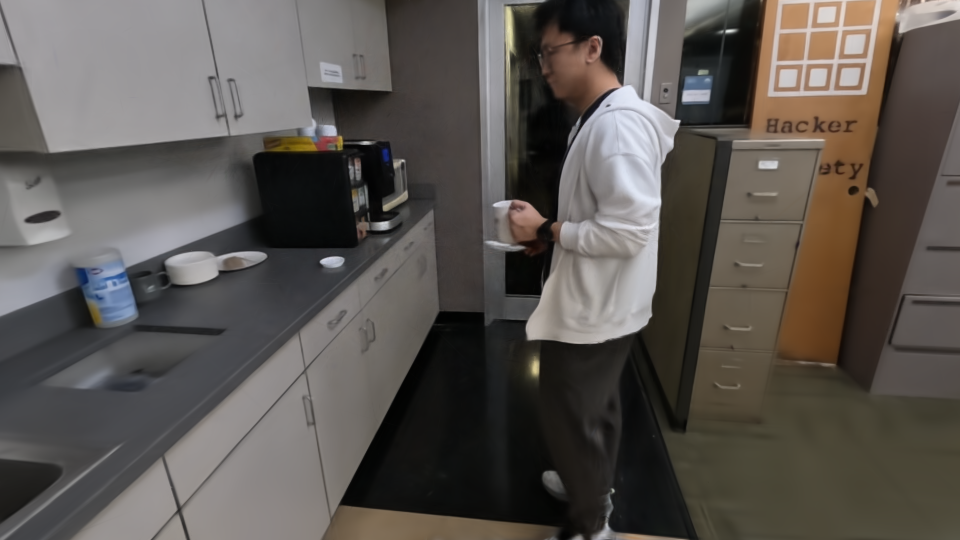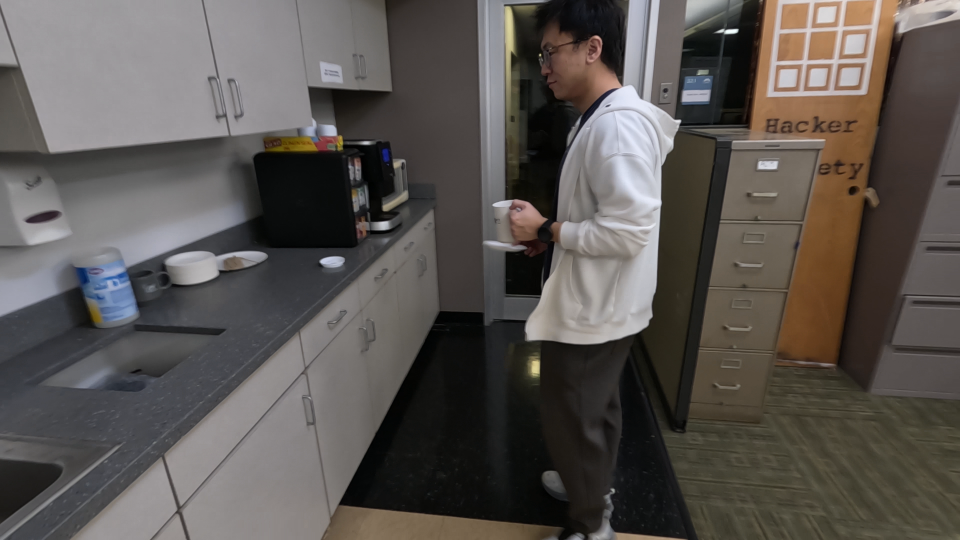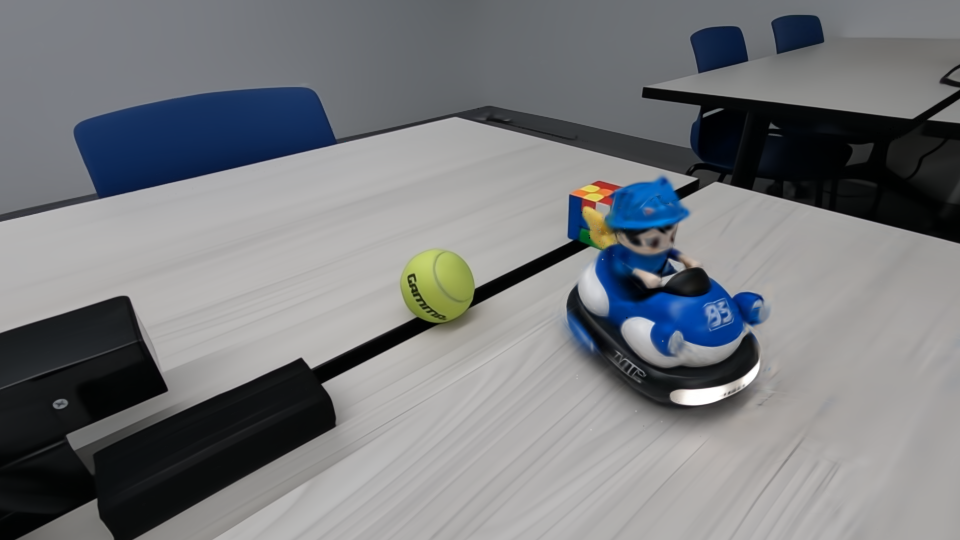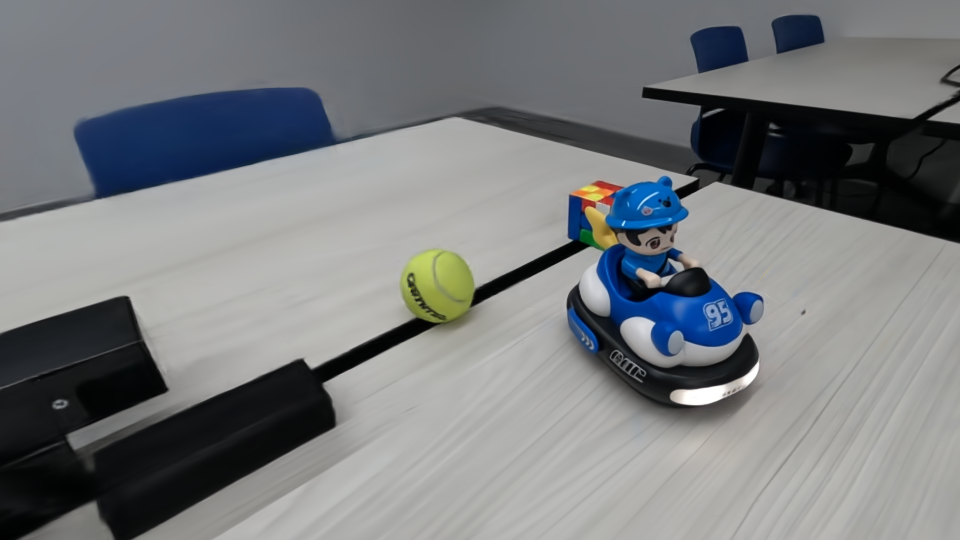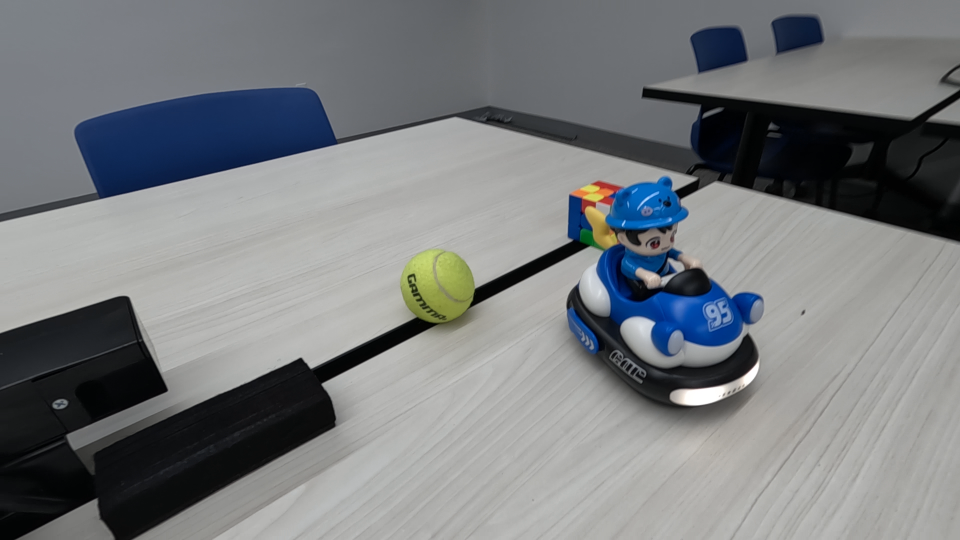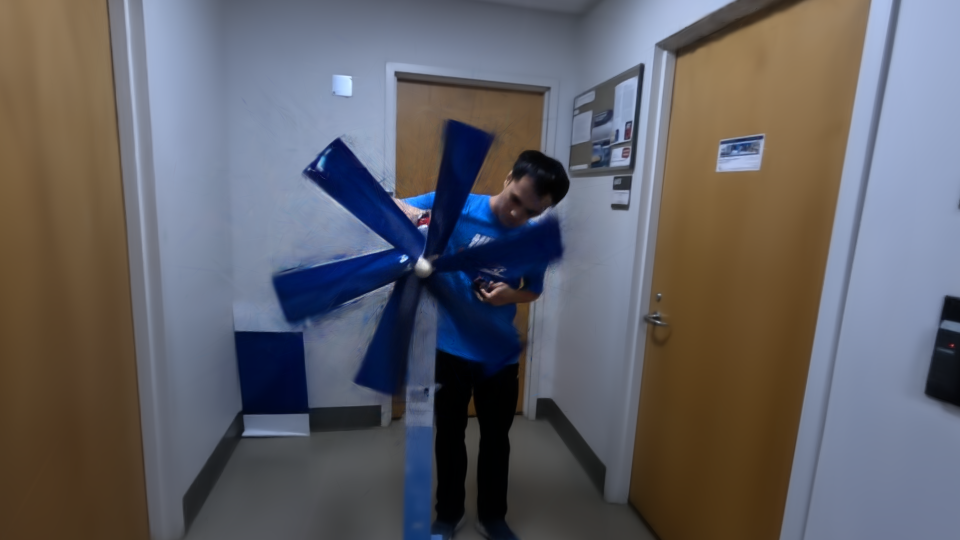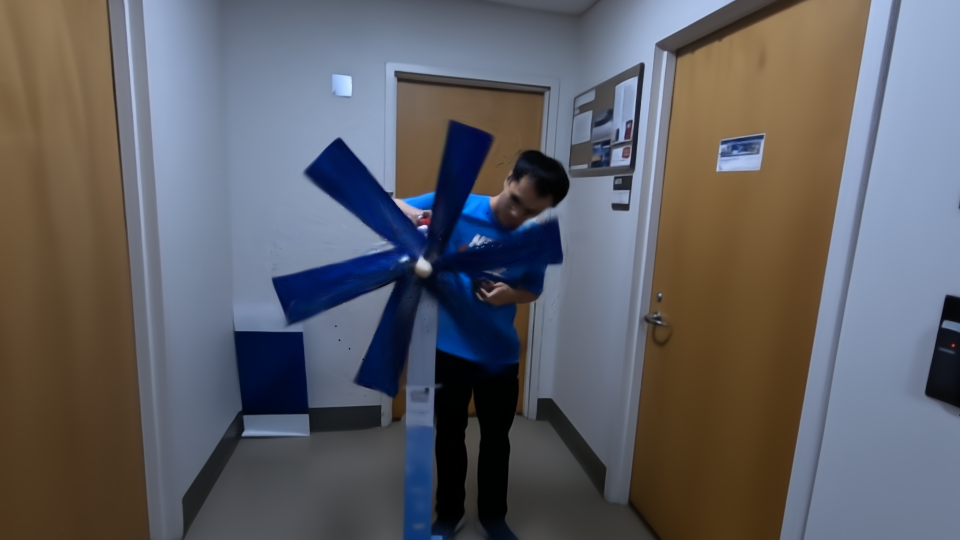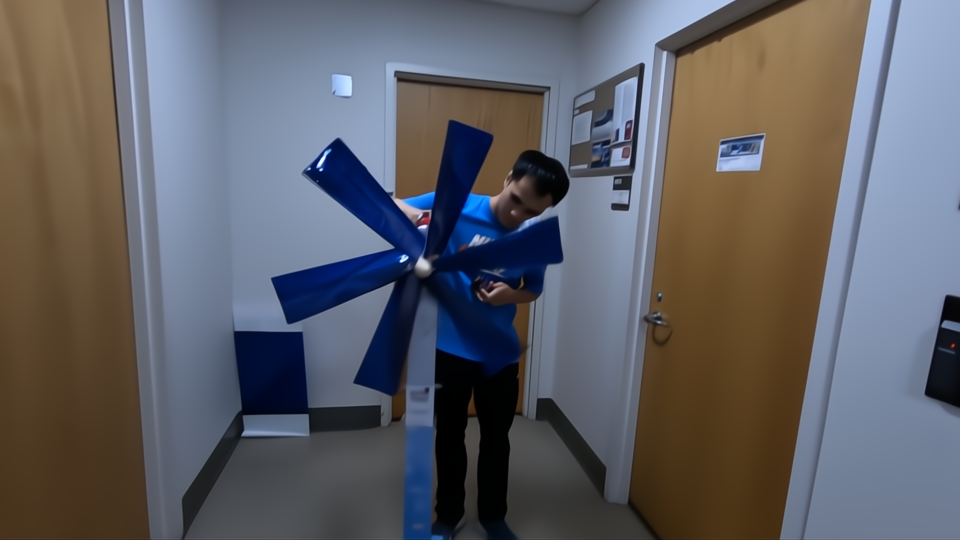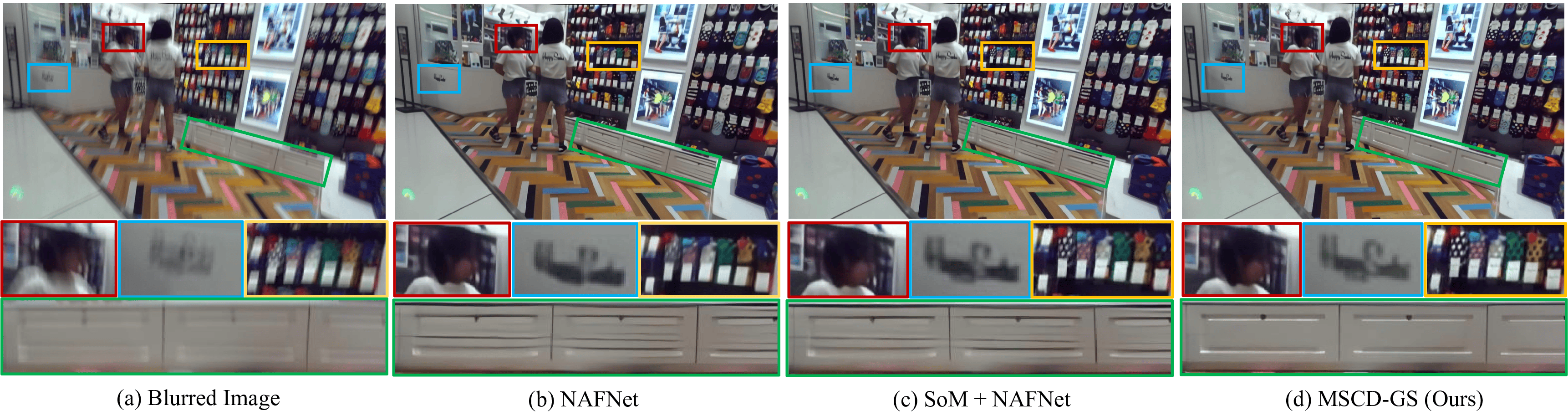
Motion blur is inevitably present in images captured by a monocular camera, which significantly degrades the quality of 4D reconstruction. Although the addition of the deblurring model NAFNet improves image sharpness, the reconstruction results of SoM still suffer from blur. Therefore, we propose a novel deblurring 4D Gaussian method MSCD-GS, which can render sharper images.
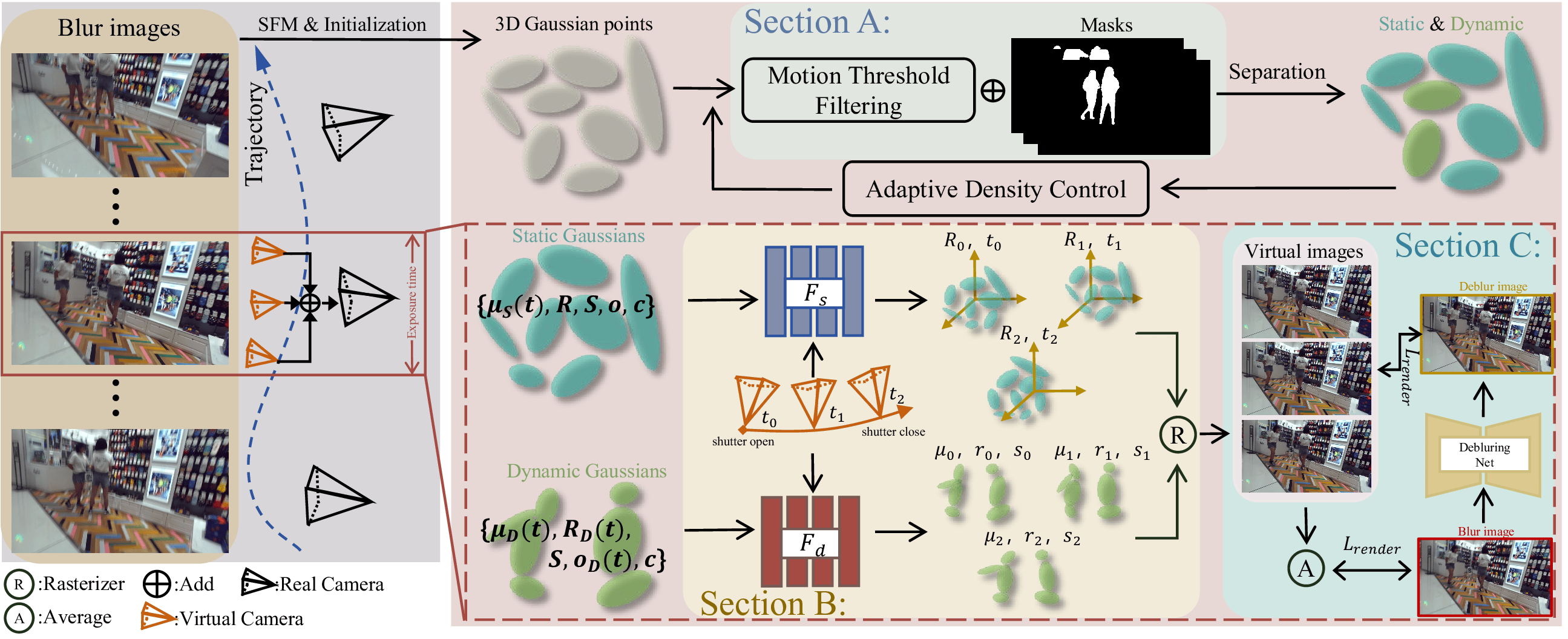
The pipeline of our MSCD-GS. We construct an initial Gaussian model using blurred images as input. Section A: During optimization, static and dynamic Gaussians are separated using Gaussian motion distance and dynamic masks. Section B: We model static and dynamic Gaussian motion separately and design two motion-aware MLPs to predict their changes over exposure time, thereby generating multiple virtual sharp images. Section C: We also utilize the results from the deblurring network to constrain these virtual images, and these virtual sharp images are synthesized into a virtual blurred image to align with the input real image.
We compare our method with BARD-GS on multiple scenes, including seesaw, card, man, women, etc. Our method produces sharper and more detailed results.